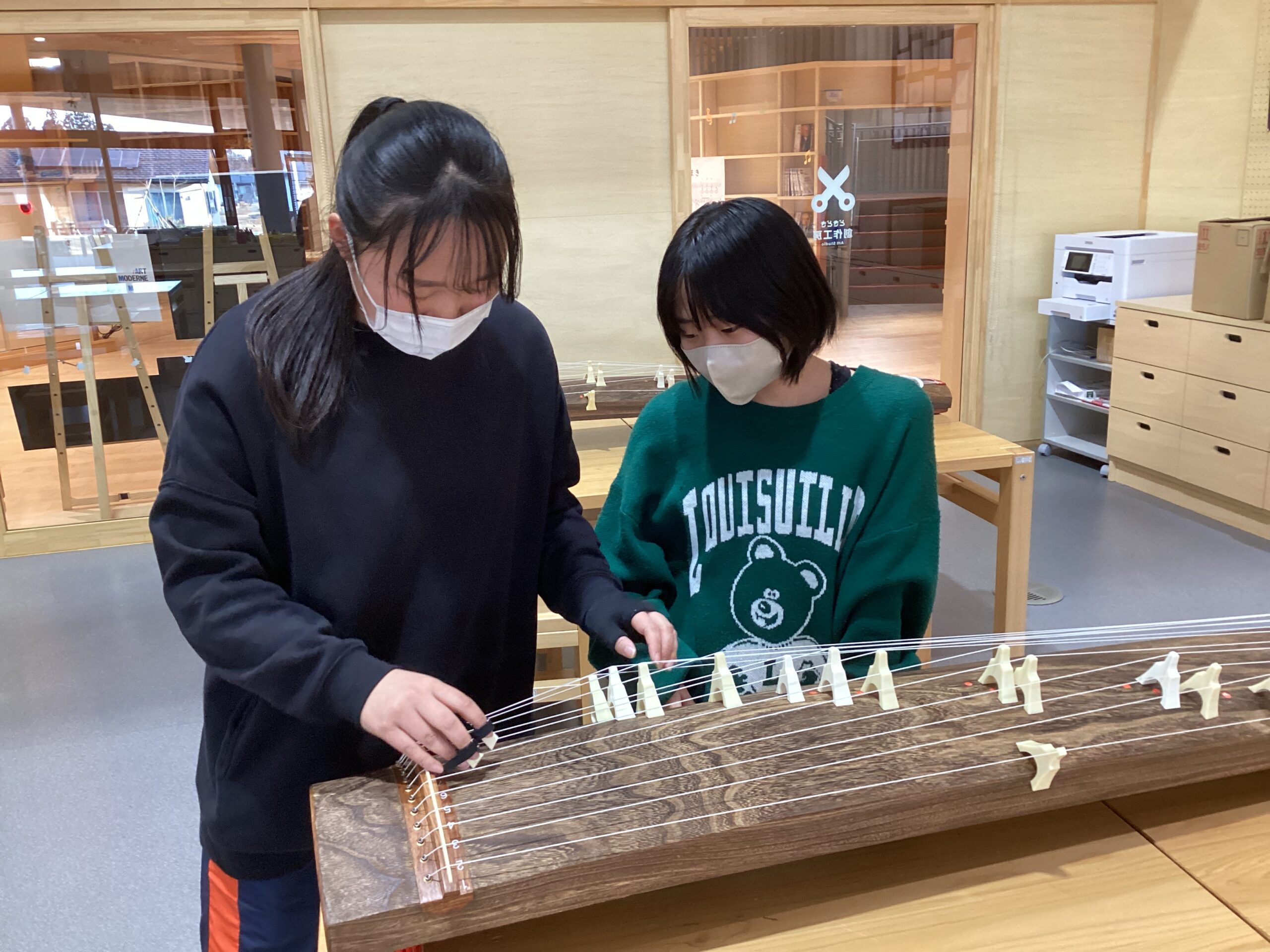

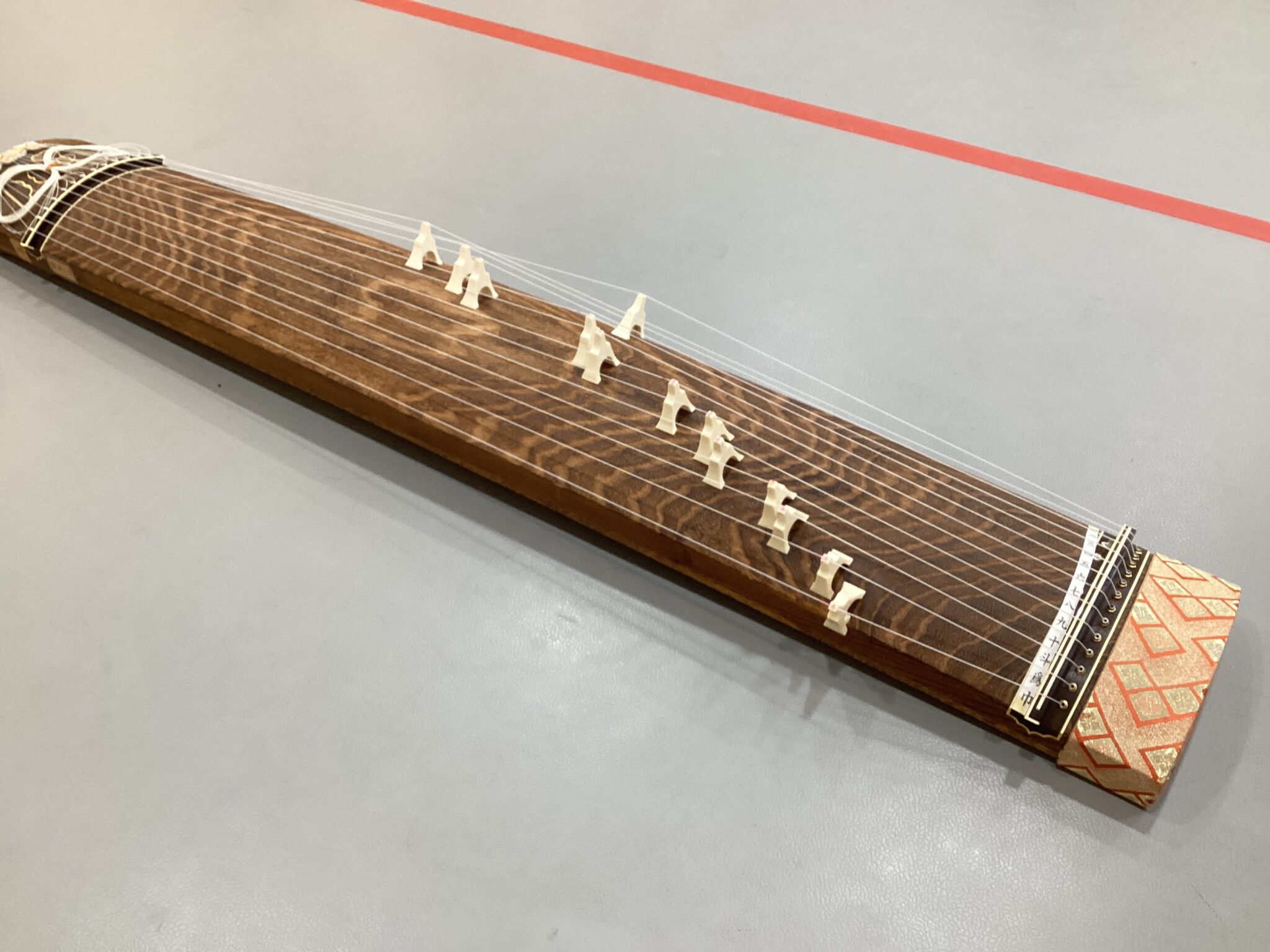
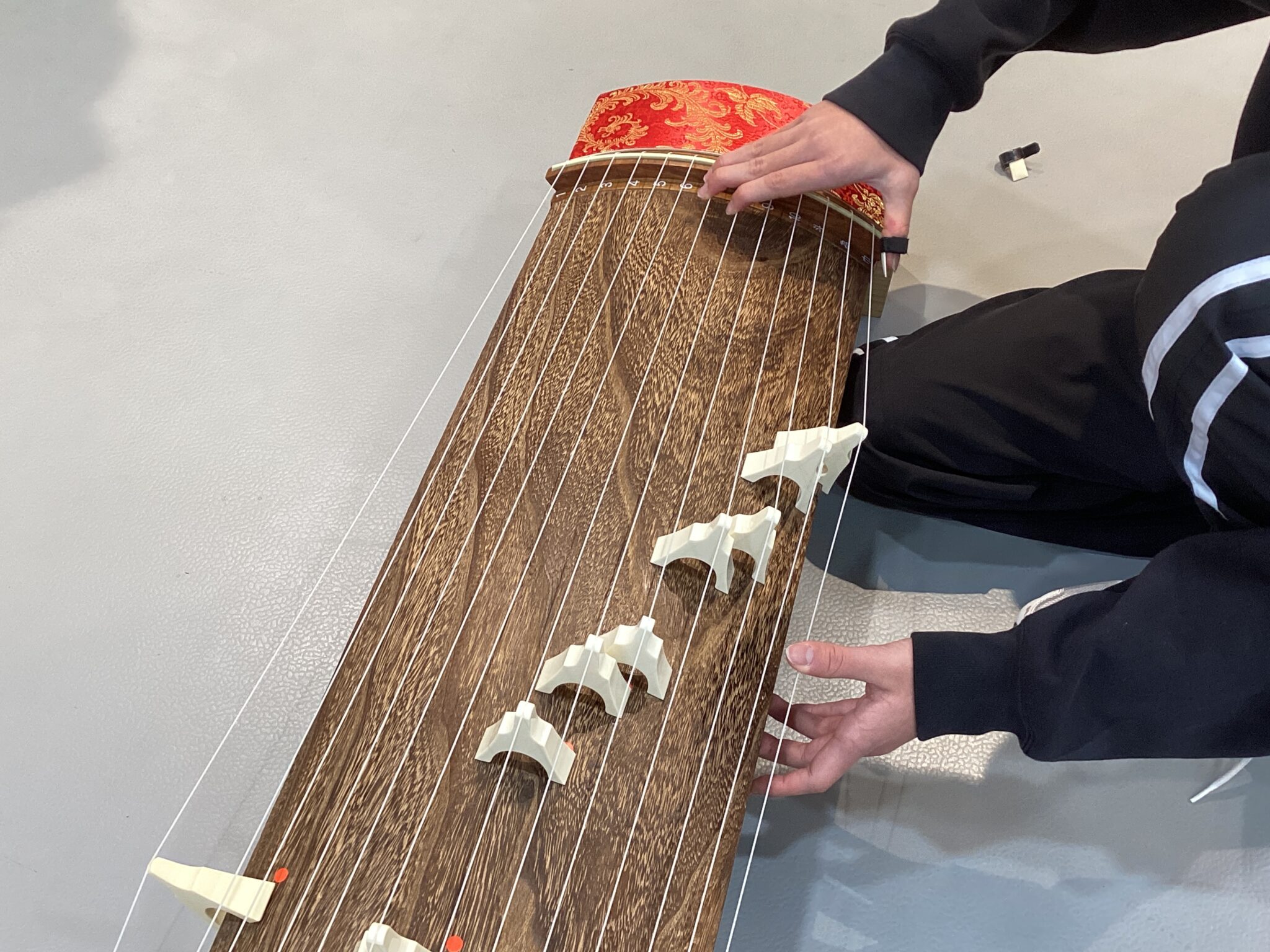
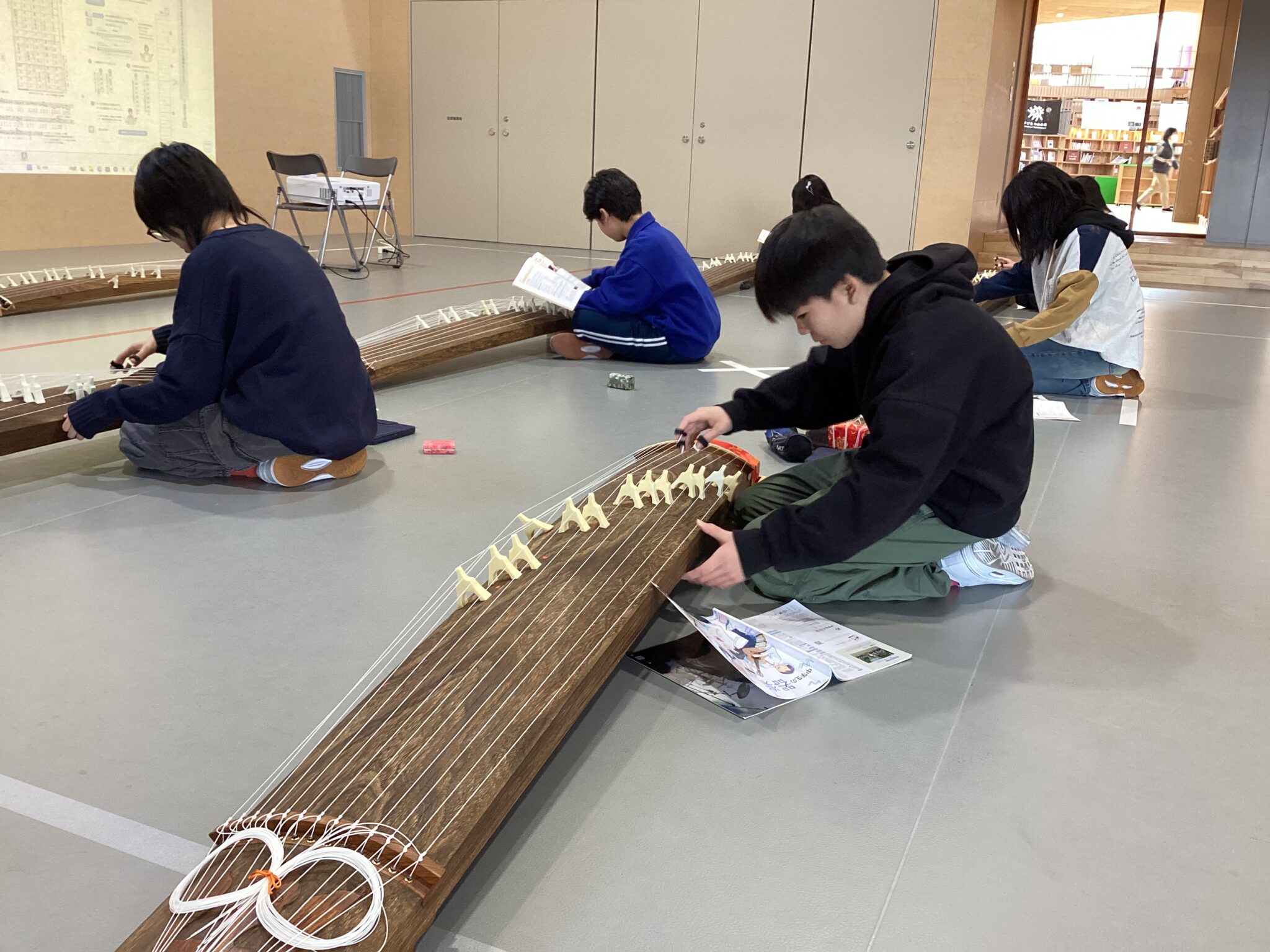
In music class for seventh and eighth-grade students, koto lessons were held with the aim of experiencing traditional Japanese instruments. Some students had already heard the sound of the koto at shrines or through the media during the New Year season. Yumenomori has six koto instruments, allowing students plenty of time to practice and explore.
Students who held the instrument for the first time were surprised by its size and weight. Even so, they experimented and played thoughtfully, considering how to produce the koto’s characteristic “rich, resonant sound.”
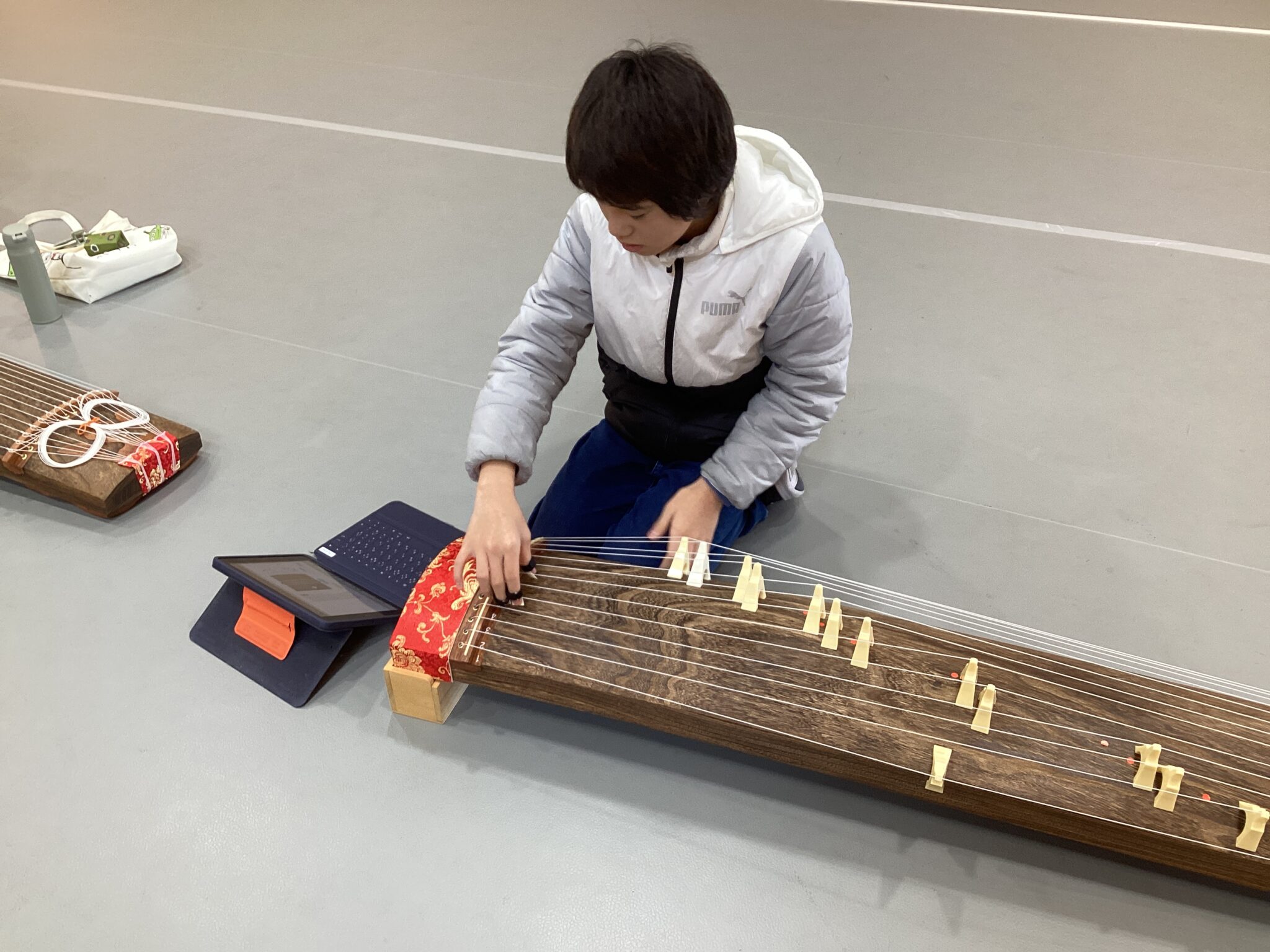
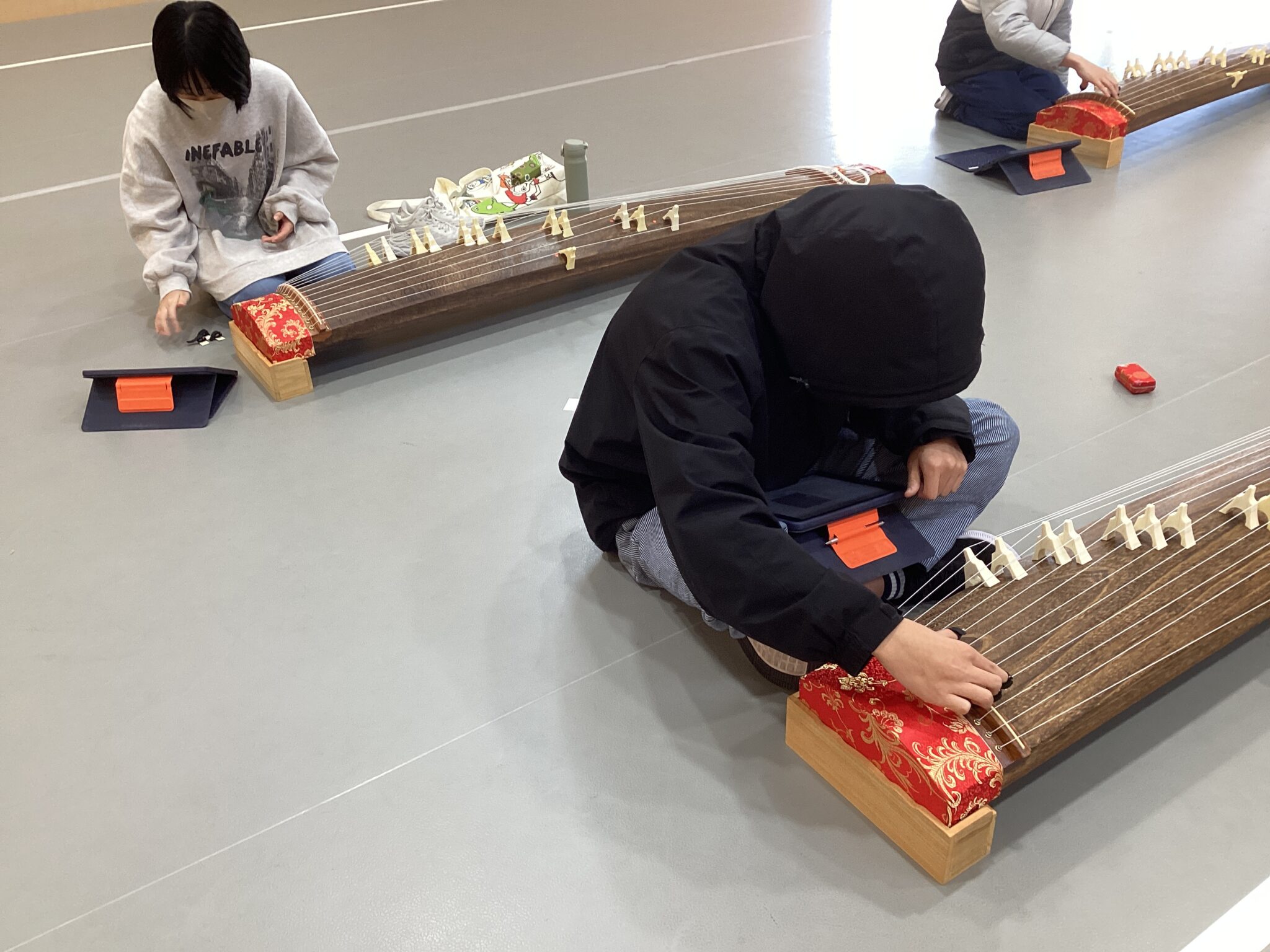
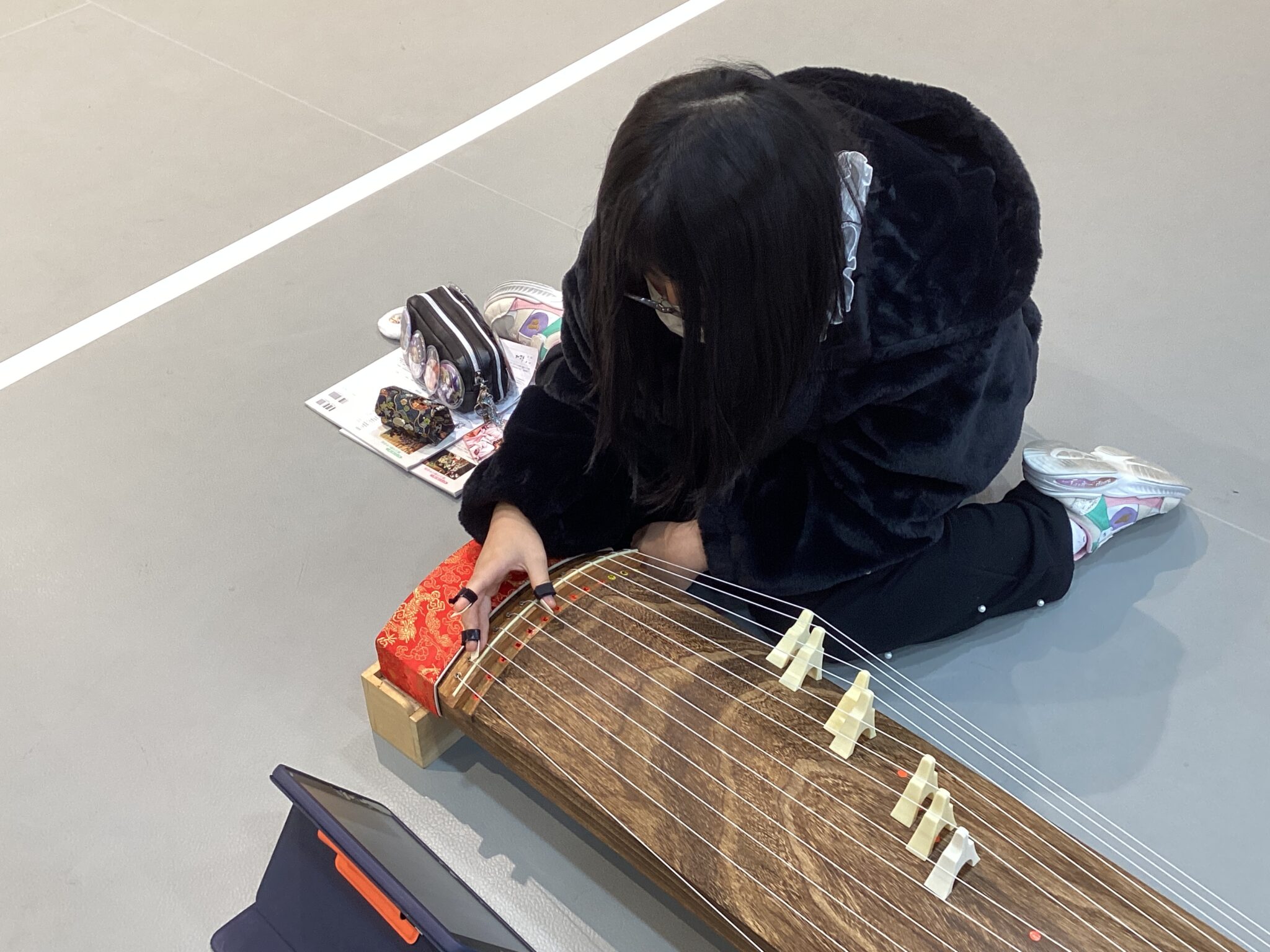
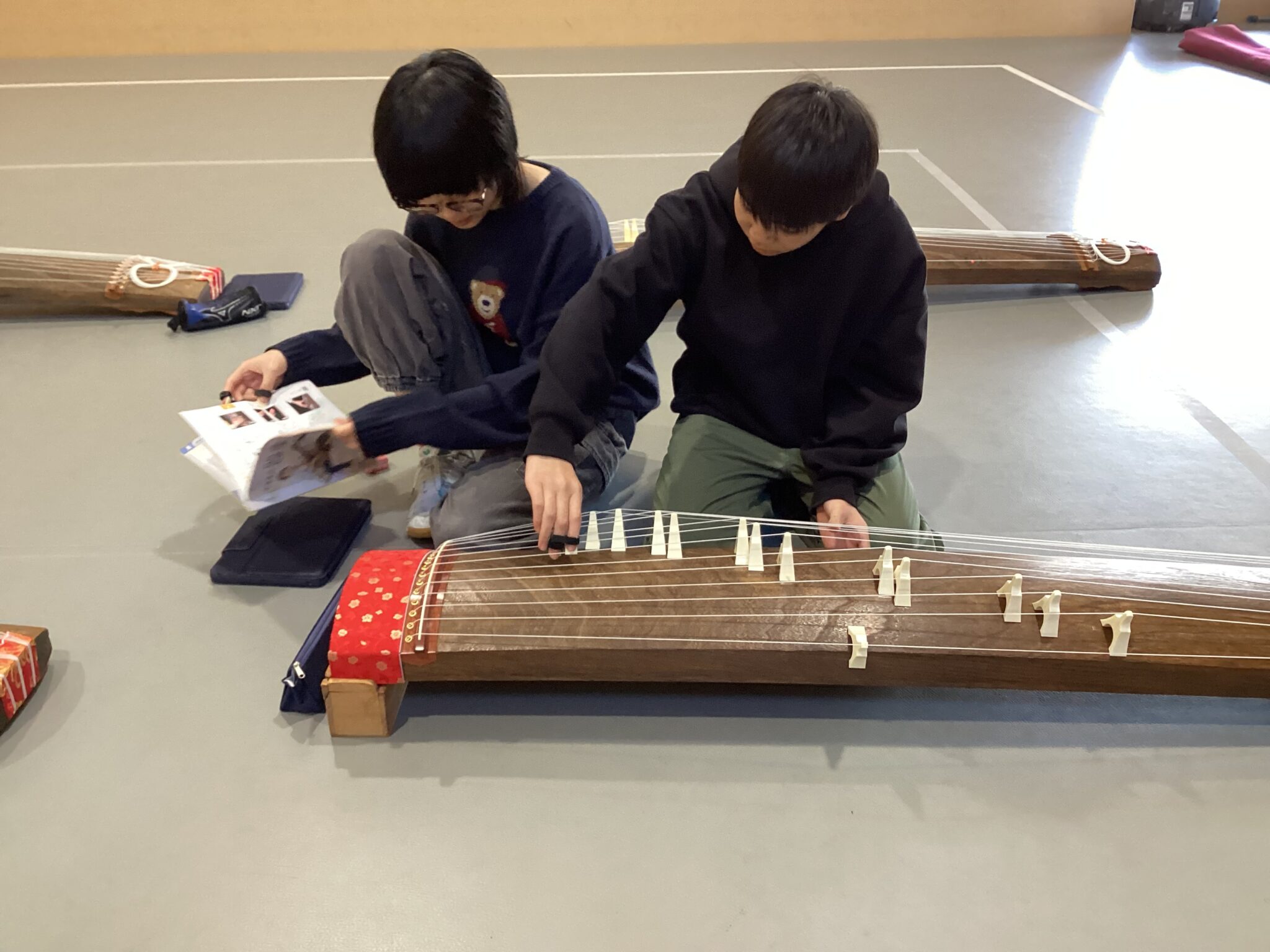
As they looked closely at the sheet music, some students noticed differences from the musical scores they usually see. Koto music is written not with staff notation, but with Chinese numerals, and it is written vertically rather than horizontally.
Comments such as, “Come to think of it, Japanese textbooks are written vertically, while English textbooks are written horizontally,” and “I think Chinese numerals are simpler and easier to understand than musical notes,” were heard. Through these contrasts with Western-style notation familiar from textbooks, students found an opportunity to reflect on what makes Japanese culture unique.
Living in Japan, it is easy to overlook these aspects of “Japaneseness,” but through hands-on experience with traditional instruments, students were able to connect with Japan’s traditional culture.
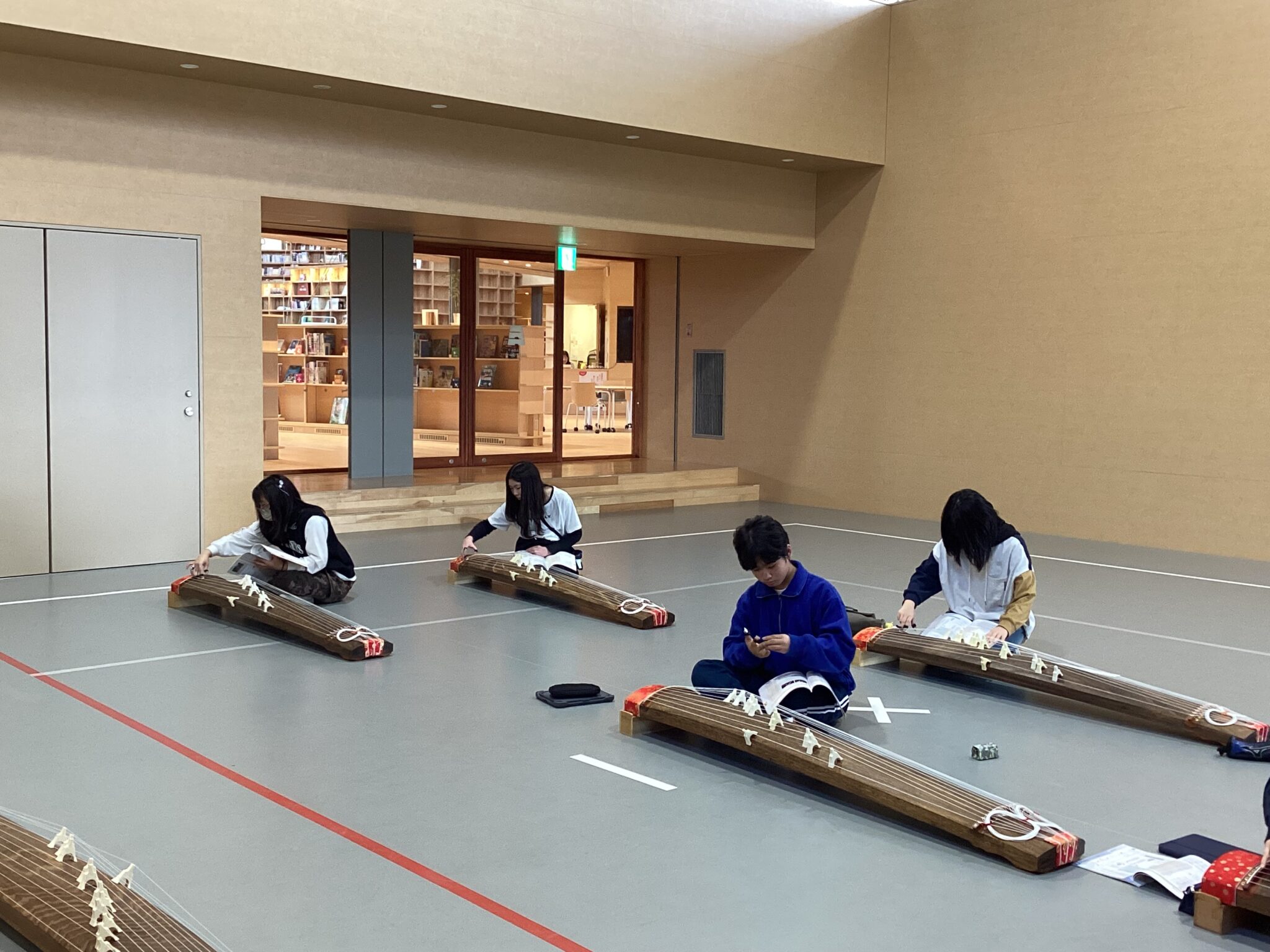
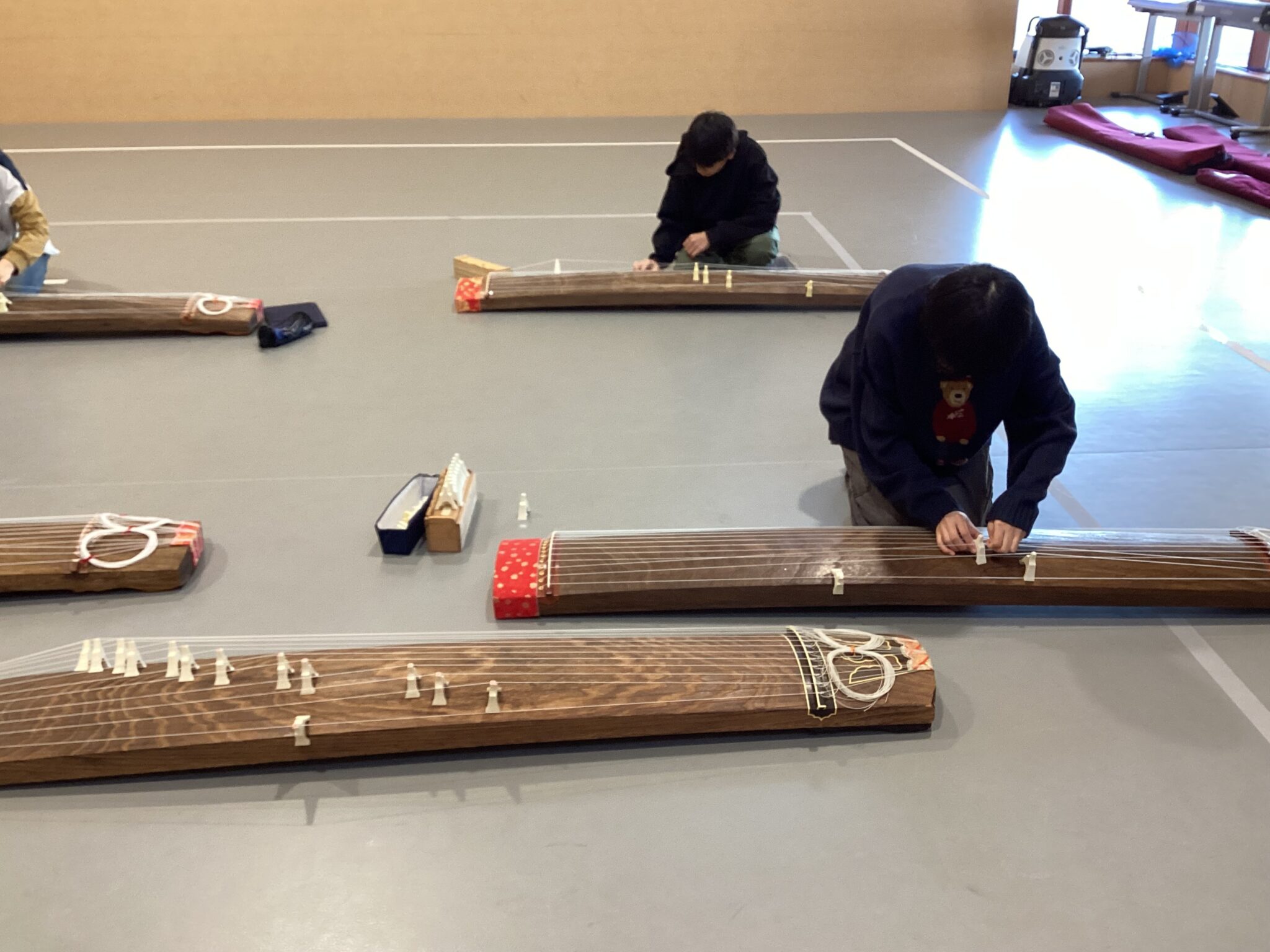
Student Reflections
- “It was my first time playing the koto. I had to play quite forcefully to make a sound, but it was a lot of fun. We played ‘Sakura, Sakura,’ and I liked how it felt very Japanese.”
- “I thought it was difficult. I learned the basics, like which string produces which sound.”
- “I had played ‘Sakura, Sakura’ on the koto before, so I was able to play it well. But my fingers hurt a lot—it was tough.”
- “Keeping three or four fingers on the strings farther away while playing was hard to get used to.”
- “Making a sound wasn’t too difficult, but I couldn’t play quickly. While playing, my fingers became very sore.”
After School as Well
One of the designers at the school said, “I was in the koto club in high school.” Inspired by the lesson, students who became interested in the koto continued enjoying playing it after school.